Custom vs Semi Custom vs Stock Cabinets
There are three ways to buy a kitchen and the differences between them are real. This page sets out what each one is, what it costs, how long it takes and when the cheapest of the three is the right answer. We build the expensive kind, so treat that last part as the important part: plenty of rooms do not need us.
What is a stock cabinet?
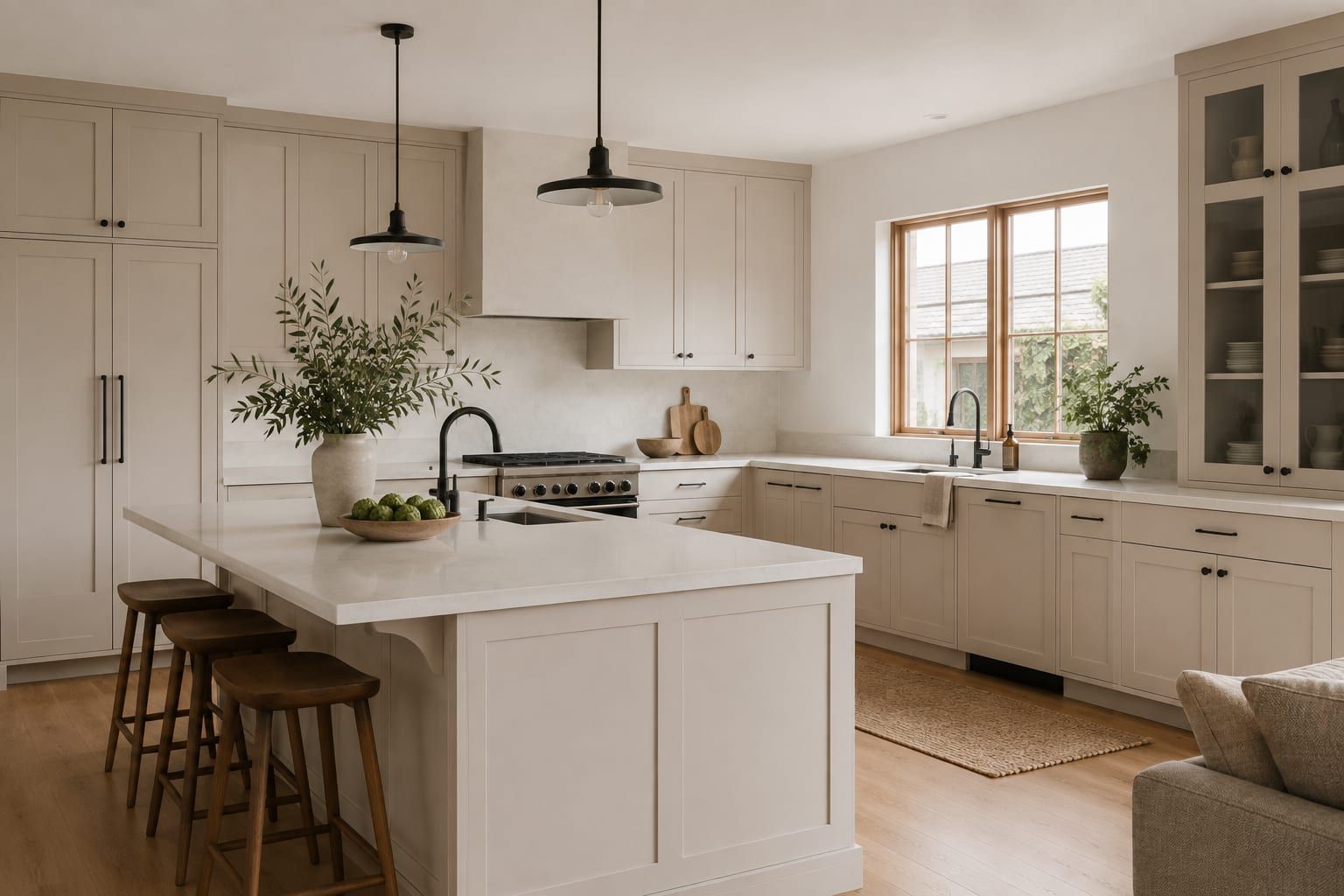
A stock cabinet was made before anybody ordered it. A factory runs thousands of identical boxes in a fixed set of widths, usually stepping three inches at a time, and stacks them in a warehouse. You buy off that list. Door styles come from a short catalog and finishes from a shorter one, and what arrives is whatever was already sitting on the shelf.
The size steps are the part to understand. If your wall measures 142 inches and the widths climb three at a time, the run will not reach the wall by itself and a filler strip closes what is left. Wall units come in a couple of set heights, so a ceiling above eight feet leaves either a dust shelf or a soffit built to hide one. Corners are usually answered with a blind base unit, which is the one nobody can reach into.
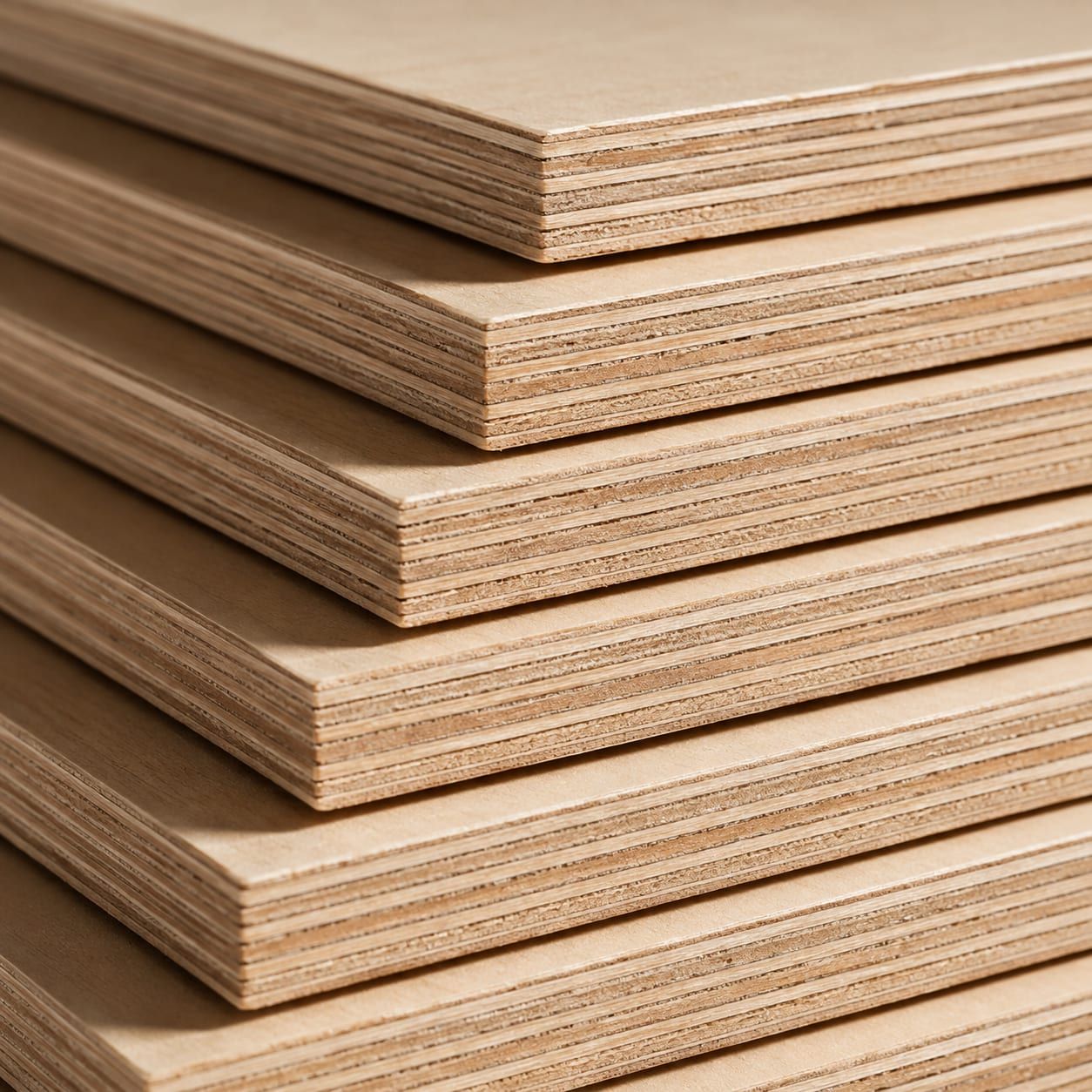
Carcass material at this level is often particleboard under a printed or laminate skin, although the better lines use plywood and it is always worth asking which. What you are buying is availability: a stock kitchen can be in the house within days.
What is a semi custom cabinet?
Semi custom is the same kind of factory, building after you order instead of before. That one difference buys a much longer menu: more door styles, more finishes, and a modification list. A reduced depth, a drawer where the catalog shows a door, a taller wall unit, a deeper toe kick, a finished end panel that matches the fronts.
Sizes still arrive in steps, and that is what keeps it semi rather than full. The factory is efficient because it works from a parametric catalog, so a width that is not on the list either costs a great deal or is simply refused. Inside the steps, though, the specification can get genuinely good, and for a room close to a standard shape it is frequently the sensible buy.
Lead time sits between the other two. Weeks rather than days, but not the wait a bench built room asks for.
What is a full custom cabinet?
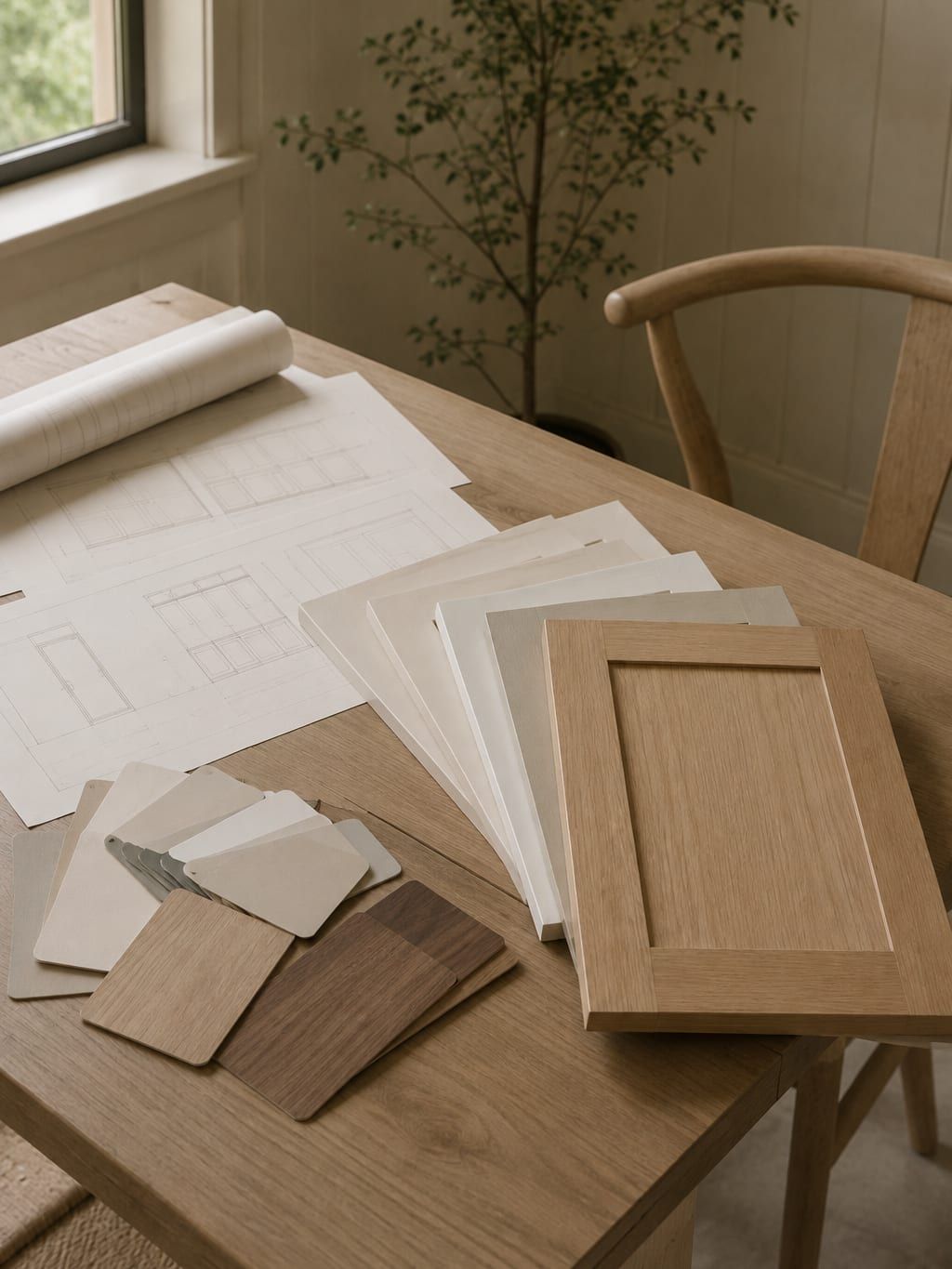
Full custom means the boxes are drawn for your room and made afterwards. There is no size list because there are no standard sizes: any width down to the fraction, any height, any depth, any species, any interior arrangement. The cabinet makers who work this way begin with a measure visit and a drawing set rather than a catalog, and the drawing is the thing you approve before anything gets cut.
What that buys is fit. The run reaches the wall because somebody measured to the wall. The upper cabinets stop at the ceiling because the ceiling was measured at both ends and the shop already knows it is not level. A post, a low window, a boxed pipe or a sloping ceiling gets drawn around instead of filled around. And the insides are yours: drawers where you want drawers, a pull out where the dead corner used to be, a depth chosen for the room rather than for the catalog.
What do the three cost?
Figures get published here for our own work and for nobody else's, so this is the honest shape of it rather than a table with three columns.
Full custom here is $650 to $1,300 per foot of run, fitted. The lower part of that, around $650 to $850, is overlay fronts, a painted or laminate face and mostly doors beneath the counter. The middle, around $850 to $1,050, covers most of the rooms that get finished. Past $1,050 you are paying for inset fronts, harder timbers and a lot of fitted interior gear. Across a whole room, the cabinetry on its own occupies a band of $22,000 to $70,000.
Stock and semi custom get sold by other companies at prices this shop does not set and will not guess at. What can be said without inventing anything is the ordering. Stock is much the cheapest of the three, semi custom sits between, full custom is the dearest, and the steps between them are large rather than marginal. Ask each of the three for an identical list of what their price leaves out, because the counter, the appliances, the tile, the floor and the trades behind them sit outside all three quotes, and that is usually where two numbers quietly stop describing the same job. The full breakdown of custom cabinets cost, band by band and driver by driver, sits on its own page.
How long does each one take?
Stock is the quick one. It already exists, so the only wait is a delivery slot and a fitter with a free week.
Semi custom is built to order in a factory that runs the same profiles every day, which makes it faster than bench work without being immediate.
Full custom is the slow one and there is no point pretending otherwise. Two to three weeks go on drawings, then six to ten weeks of bench work. Add fitting and the trades that follow it and a kitchen becomes a three to four month project counted from the first visit.
If your timeline is genuinely fixed and genuinely short, that ordering is the whole decision and nothing else on this page matters. No specification is worth a kitchen that turns up after the thing you needed it for.
When is stock genuinely the right call?
Often enough that any cabinet company pretending otherwise is selling rather than advising. Stock is the right answer in any of these four situations.
The room is close to standard already. An eight foot ceiling, square walls, ordinary appliance sizes and no awkward geometry. Custom exists to solve problems, and a room without those problems is paying for nothing.
The property is a rental or is about to be sold. A kitchen that works and looks clean does the job, and whoever moves in will change it to their own taste anyway.
The budget will not stretch. If the real alternative is another five years of a kitchen that is failing, a well fitted stock kitchen beats a bench built one you cannot afford, and it beats waiting.
It is a utility space. A laundry, a mudroom, a workshop bench or a small secondary kitchen rarely repays bench work.
In all four cases the fitting matters far more than the label on the box. A stock kitchen hung level, packed properly to the wall and finished with decent hardware outperforms an expensive one hung carelessly, every time.
When does custom actually pay for itself?
When the room refuses to behave like a catalog, or when how the storage works matters more than the rate per foot. In practice that means a ceiling that is not eight feet or one that slopes, where the spare height either becomes storage or becomes a soffit. Walls out of square, which most older houses in this city are. A bearing post, a low window, a boxed pipe run or a stair intruding into the room. Wanting drawers rather than doors right through the base run. Panel ready appliances, which want a matching panel cut to the maker's own template. Or a depth that is not twenty four inches, which comes up constantly in narrow galley kitchens.
Any one of those on its own is worth pricing custom against semi custom to see. Two or three of them together and the comparison generally settles itself before anybody reaches a number. The kitchen cabinets page goes through what that looks like room by room.
What about the boxes you already have?
There is a fourth option people skip past, and on a lot of kitchens it is the best value of the lot. Where the arrangement suits you and the boxes are firm, square and screwed to each other rather than nailed, cabinet refacing puts fresh doors and drawer fronts, plus a new coating, onto the carcasses you already own. A refaced kitchen here costs $12,000 to $22,000, commonly forty to sixty percent of what building the same room again would take.
The one thing it cannot do is relocate anything. The moment you want a run to end somewhere else, a deeper drawer bank, or a different appliance arrangement, that saving evaporates and new cabinetry becomes the better spend. But for a sound kitchen wearing tired fronts, it is the cheapest route to a room you like looking at.
Nobody needs three quotes for three different products. Work out which of the four categories your room belongs in first, then collect two prices inside that category. If you are not sure which it is, photograph the corner cabinet, the sink base and the gap above the wall units, and it is usually a five minute answer over the phone.
Get a written price before you compare
Free in-home consultation and a written quote.