Cabinet Installation in Huntington Beach, CA
Cabinet installation gets booked by homeowners and contractors across Huntington Beach, and up and down this stretch of the Orange County coast, often on cabinets bought from somebody else entirely. What you are paying for is a finished run that ends up level, scribed to the walls and aligned door to door.
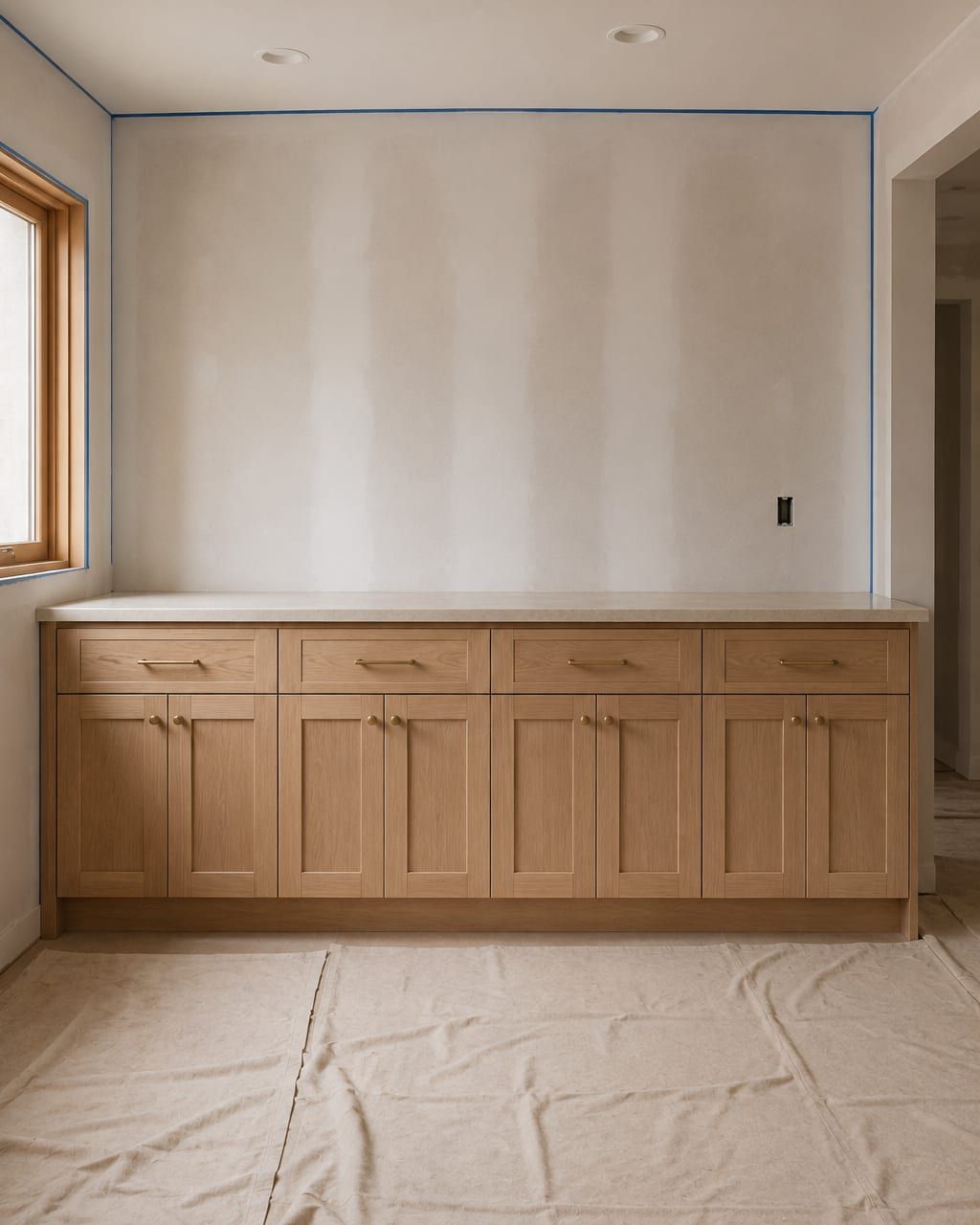
What Install Only Cabinet Work Covers
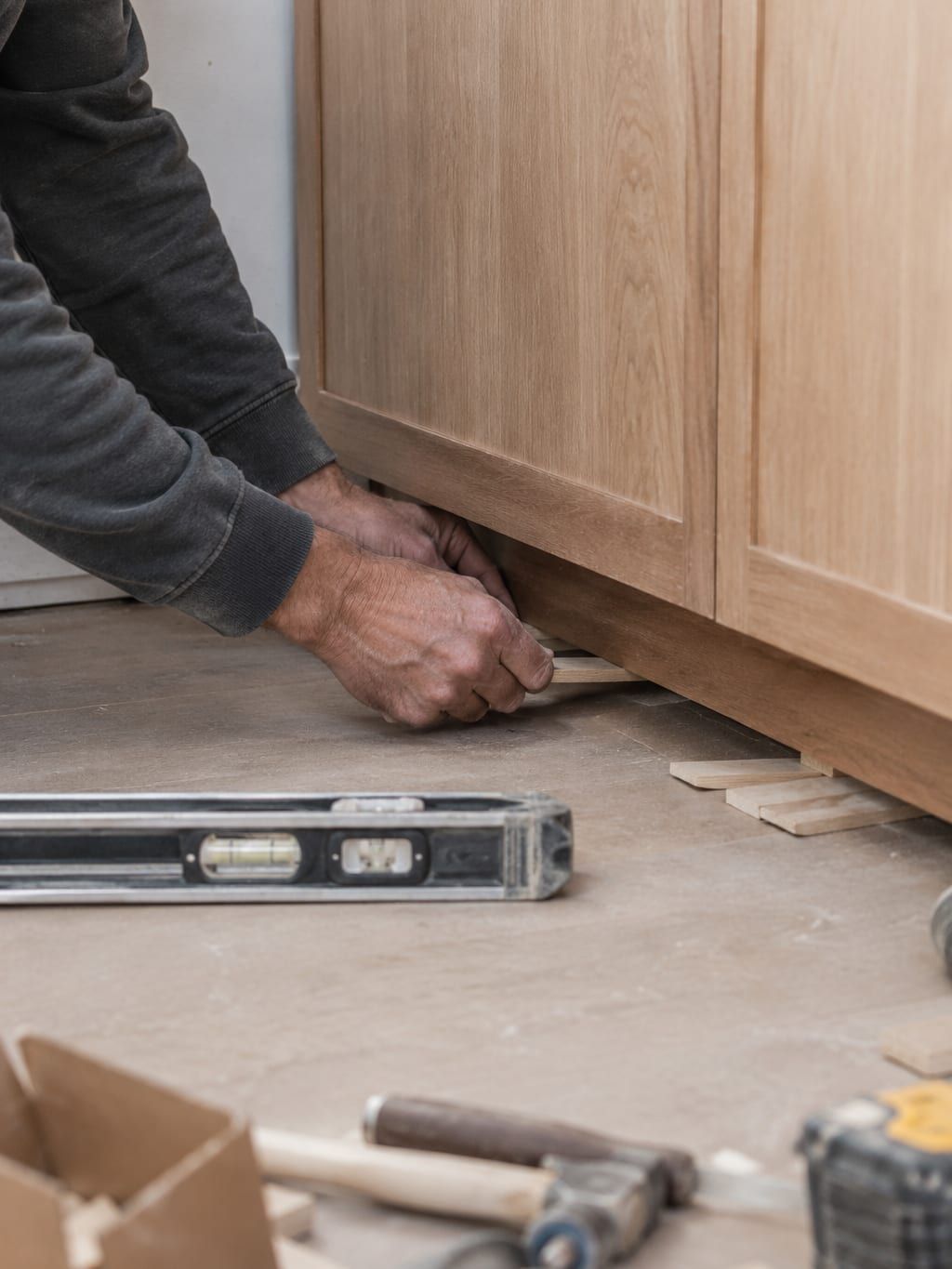
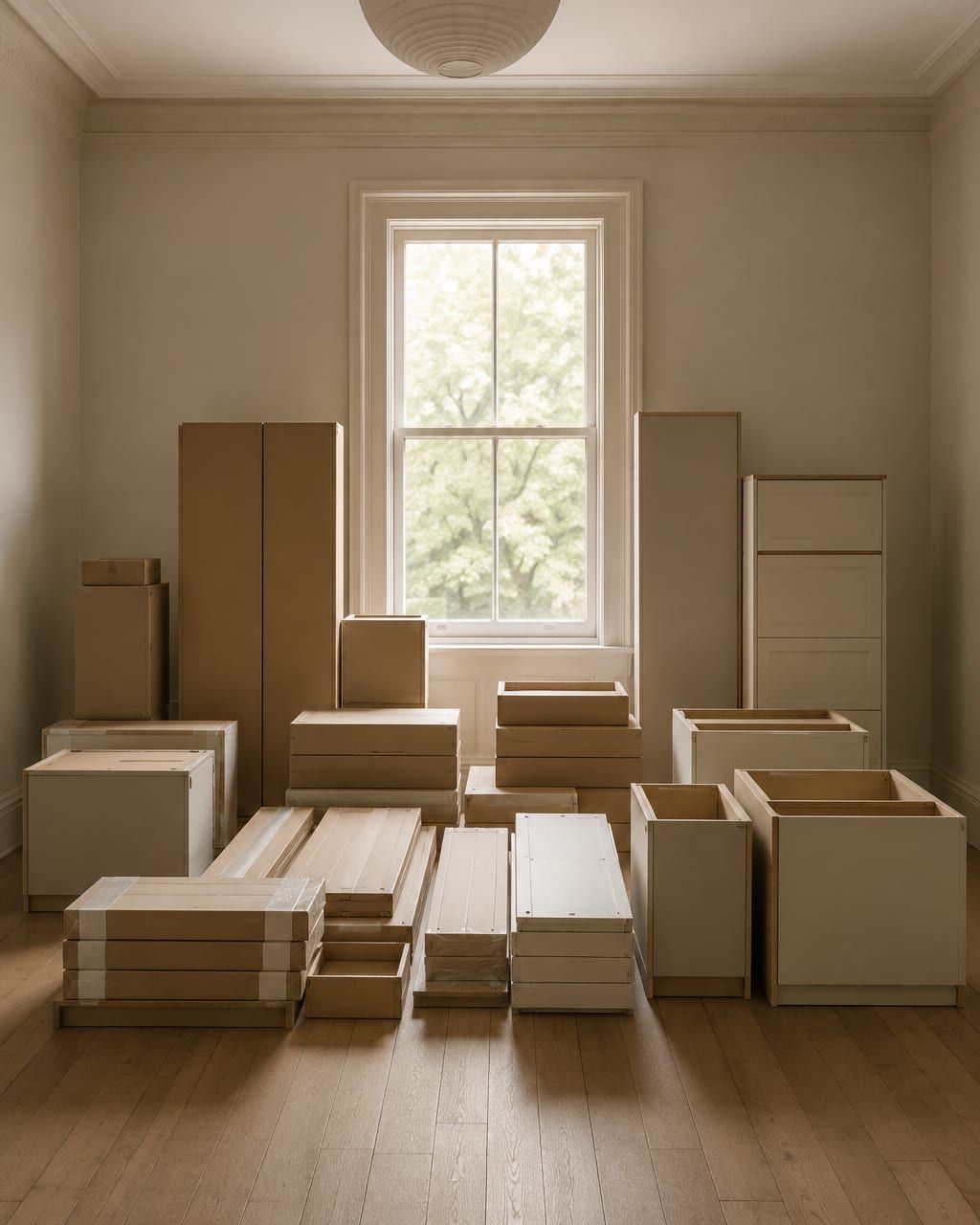
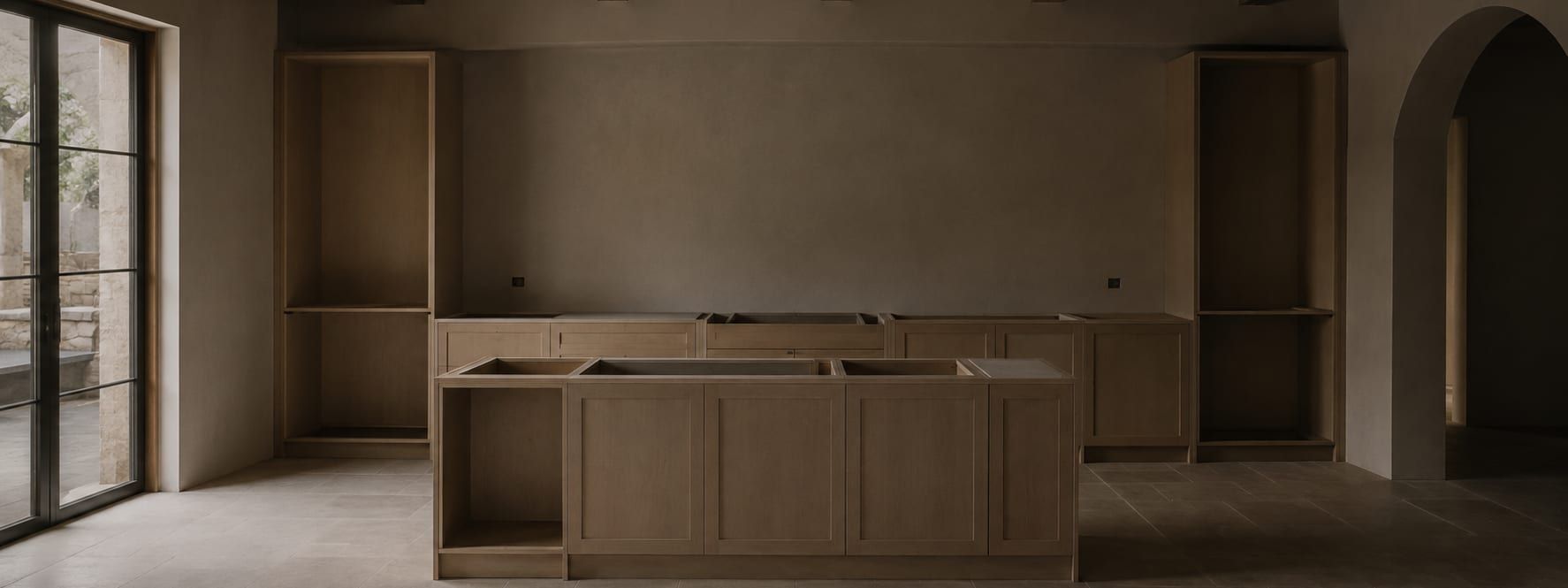
Install only means you supply the cabinets and we supply the crew. Day one opens by checking the delivery against the plan, because a missing filler or a wrong hinge caught at the start is a phone call, while the same problem caught a day later is a lost day. After that comes a level line marked around the room, every stud found and penciled, and the base boxes set first, packed to the line and clamped and screwed to each other before anything touches the wall.
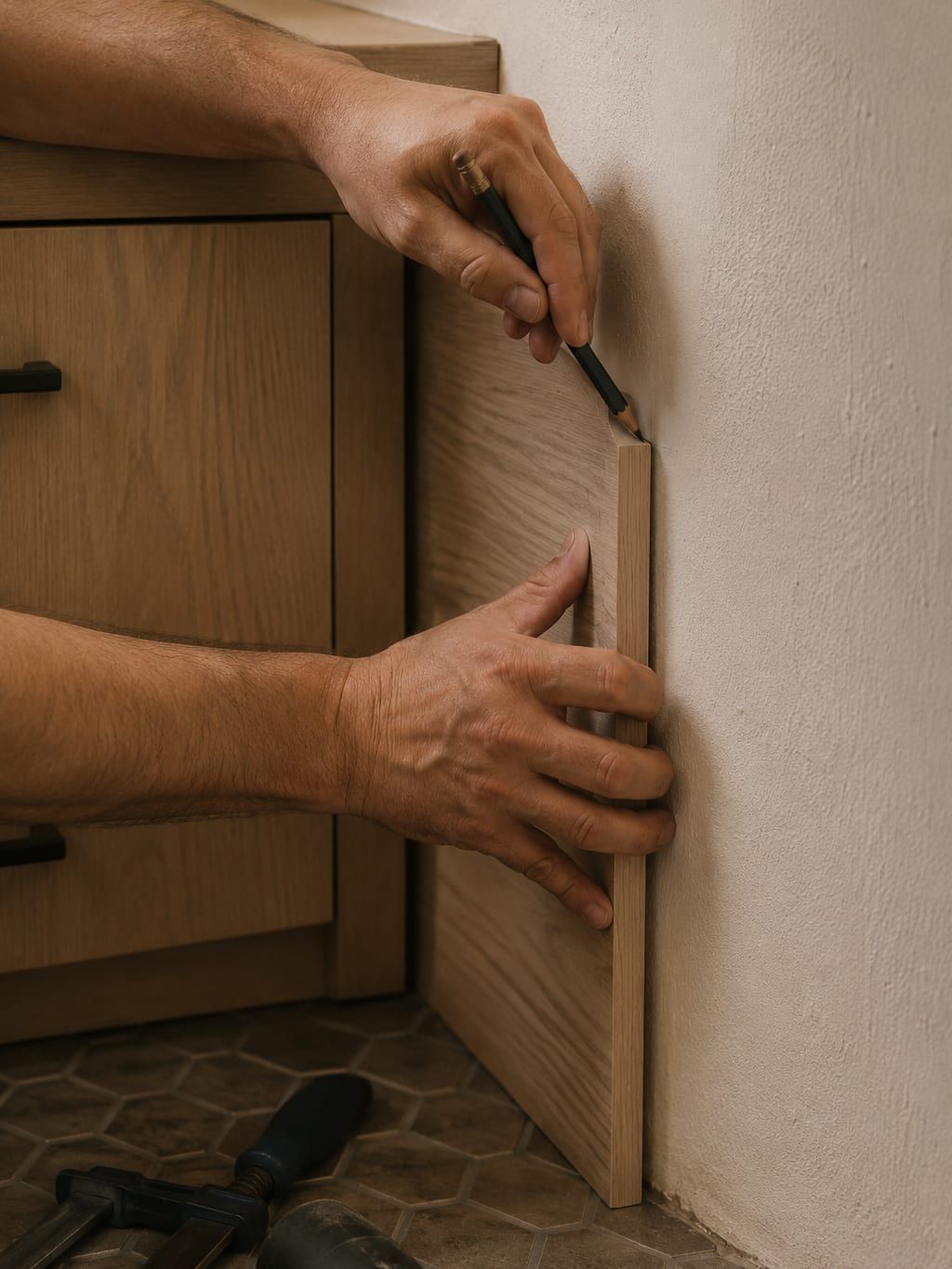
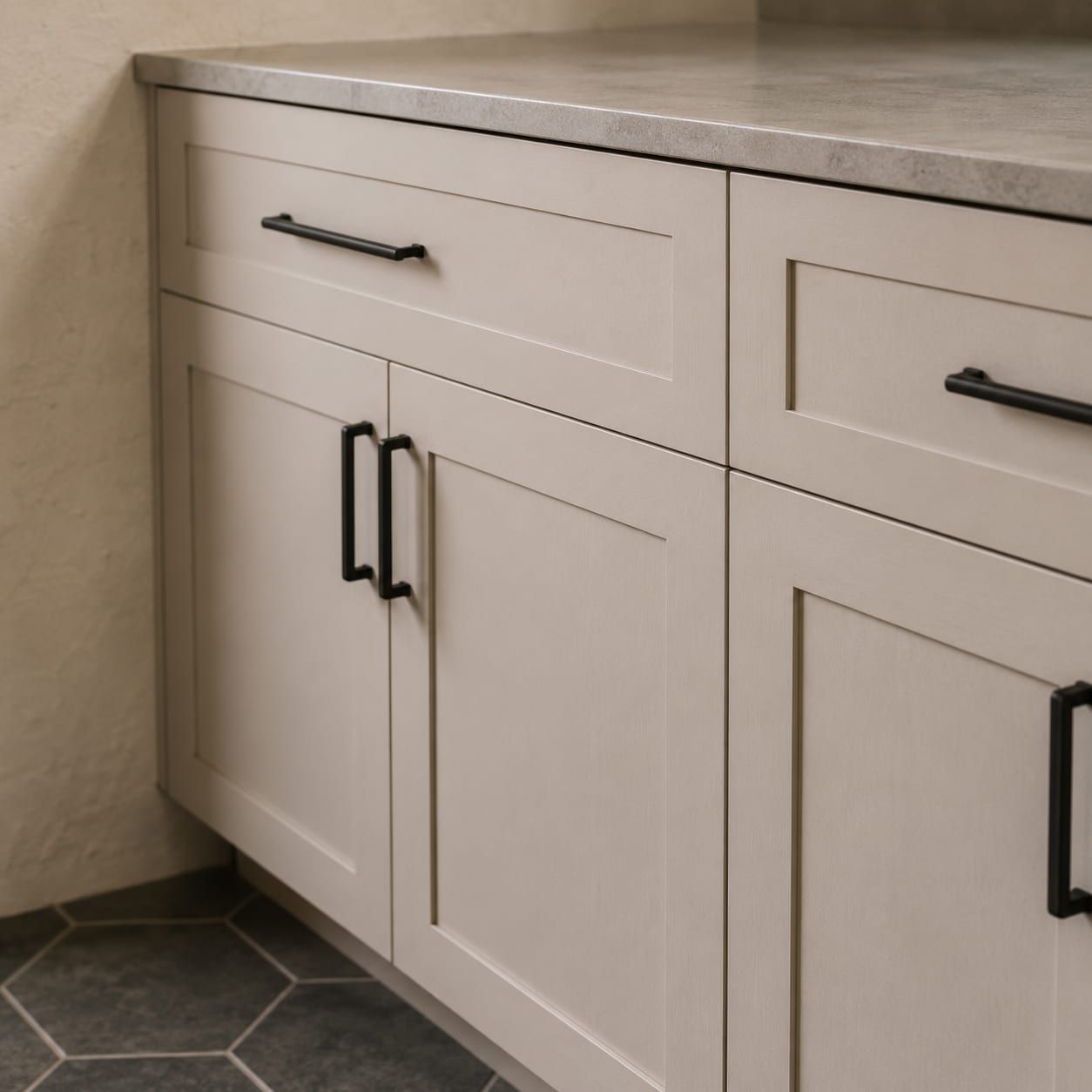
Upper boxes go on next, hung off framing rather than off drywall anchors. Tall cabinets and any island follow. Then the part that decides how a kitchen cabinet installation actually looks: scribing fillers into walls that wander, setting toe kick, cutting and fixing end panels, and running crown or light rail where the design calls for it. Last of all, every door and drawer gets adjusted, which across a whole kitchen is an hour or two of very small movements.
One company can do both halves if you would rather. We also install custom cabinets that we drew and built ourselves, and the kitchen cabinets page explains that route. Beachfront remodels in Seal Beach come to us both ways.
When to Hire a Cabinet Installer Rather Than Buy Installation
Three situations argue for hiring a cabinet installer separately. The first is buying from somewhere that sells boxes but hands the labor to whoever happens to be free, which is common and is where most bad results come from. The second is acting as your own general contractor and wanting the schedule in your own hands. The third is having a professional on the design side who is never on site, the usual arrangement with an interior designer.
Buy the labor from your cabinet supplier instead when the supplier's own crew handles the supplier's own product and stands behind the whole thing as one package. That really is simpler, and for most people it is the right answer. Splitting the two buys you control, not a lower price.
Whichever way you go, book the crew before the order is placed rather than after. Lead times on good crews run longer than most people plan for, and cabinets sitting boxed in a garage for six weeks is how doors pick up damage.
Why Installs Go Wrong, and What It Looks Like Afterwards
Nearly every bad result traces back to one of four things, and all four are visible from across the room once you know what to look at.
Boxes referenced off the floor instead of a struck line, which shows up as a counter that climbs at one end and door gaps drifting along the run. Upper boxes hanging on drywall anchors instead of studs, which holds right up until the shelves are loaded. Fillers left as parallel strips against a wall that is nothing of the kind, so a tapering gap opens and gets caulked rather than cut to shape. And doors nobody adjusted after hanging, so the spacing between them wanders and the whole room reads as slightly off without anyone being able to name why.
None of that is hard to avoid. It gets avoided by spending the first two hours setting up properly and the last two hours adjusting, which is exactly the time that disappears when a crew is paid by the room rather than by the result.
What Affects a Cabinet Installation Price
Box count is the base. Four things move the number after that. Cabinet type is one: tall cabinets, islands and anything carrying an integrated appliance panel absorb far more time than a plain upper box. Site condition weighs even heavier, since a room with flat floors and plumb walls goes in far faster than one asking for packing and scribing at every position.
Scope past the boxes is the third: demolition, disposal, crown and light rail, appliance panels and any drywall repair are each their own line. Access is the fourth, and it is the forgotten one. A second floor condominium with an elevator, a tight stair, or a long haul from the curb burns real hours before a single box is set.
Every quote for cabinetry we build already has the labor inside it, so the figures above apply to install only work. For the supplied and installed route, the cost guide carries the room by room bands.
Cabinet Installation Work, Step by Step
Frequently Asked Questions
What does cabinet installation cost on its own?
Install only work is priced per box, normally $120 to $260 for a standard wall or base cabinet, with tall cabinets and islands sitting higher because they take longer to set and level. Twenty to thirty boxes therefore comes out somewhere between $2,400 and $7,800 in labor. Demolition of the old kitchen, haul away, filler and trim fabrication, appliance panel work and any patching of walls behind the old run get quoted separately, because they vary enormously from house to house. You get a per box number and a written scope list once somebody has seen the delivery and the room.
Will you install cabinets I bought somewhere else?
Yes, and it is ordinary work for us. Flat pack and ready to assemble kitchens, imported cabinetry, boxes supplied through a designer or a general contractor, and orders shipped straight from a manufacturer all get handled the same way. Two conditions make the day go well. Have everything on site and unpacked beforehand, so a damaged or missing part surfaces early instead of halfway through. And know which filler and trim pieces arrived with the order, because the gap between the last cabinet and the wall decides whether the finished run looks resolved or not.
Why does leveling matter so much on an older house?
Because a cabinet run is a straight line and an older floor is not. Homes along this coast routinely have floors dropping half an inch or more across a kitchen, and slabs that settled unevenly. Reference the run off the floor and it copies that drop, so by the far wall the counter is visibly out of line and the doors stop matching each other. The answer is a level line struck around the room, packing under the boxes wherever the floor falls away, and a toe kick scribed to close the changing gap underneath. That scribe is what separates cabinetry that looks made for the room from cabinetry that looks delivered to it.
Do you handle demolition and disposal of the old kitchen?
We can, and it goes on the quote as its own line rather than disappearing inside the labor figure. Taking an old kitchen out carefully eats most of a day, because water and gas need isolating, the counter has to come away in pieces, and old boxes that were nailed rather than screwed often bring drywall with them. Disposal is charged at cost. If you are running the project yourself and want to strip the room to save money, that is a perfectly reasonable call. Leave the walls alone, do not touch plumbing or gas, and let somebody look at the room before the new run is scheduled.
Get a free cabinet installation quote
Free in-home consultation and a written quote.