How to Choose a Cabinet Maker
Hiring for cabinetry is unlike hiring for most trade work. You are paying a large sum for something that does not exist yet, months before you can see it, and the only evidence you get in advance is how the company answers questions. Six answers tell you most of what you need. Here they are, and what a good version of each sounds like.
Do you get real shop drawings?
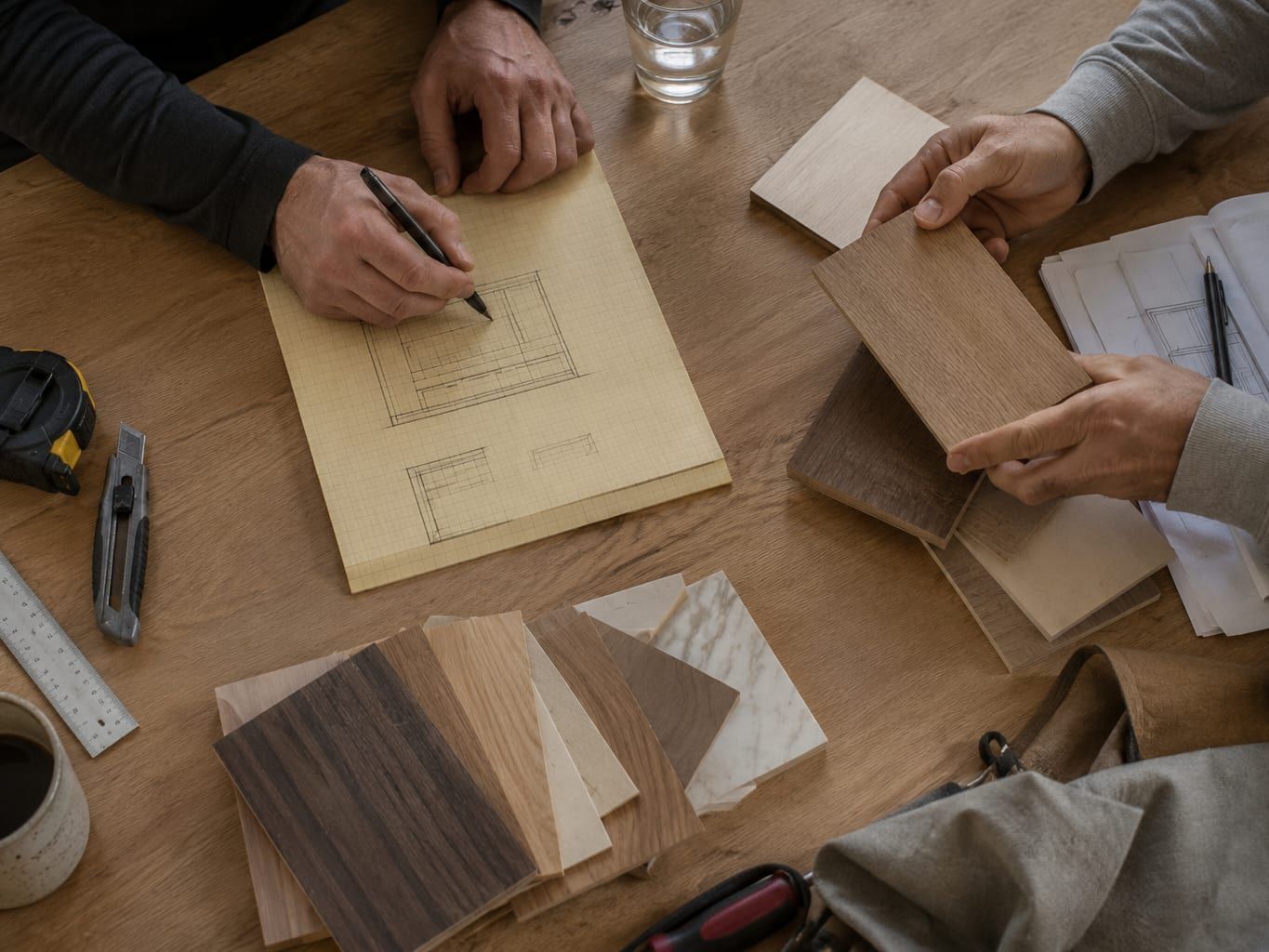
This is the first question and the most useful one. Before anything is cut, you should be holding elevations of your own room with dimensions written on them: cabinet widths, heights, the reveal around the fronts, where each appliance opening sits, how the run meets the ceiling and the wall at either end.
A drawing does three jobs at once. It shows you what you are getting while changing it is still free. It gives the bench something exact to work to. And afterwards it is the thing the finished room gets checked against, which matters more than people expect, because memory of a conversation six weeks ago is not evidence of anything.
A colored render is a nice extra and is not a substitute. Renders show mood. Elevations show sizes. If you only get one of the two, the one with numbers on it is the one worth having.
It is fair to ask when the drawings arrive and whether revisions cost anything. Most cabinet makers expect a round or two of changes and price the design stage accordingly, so the answer should come easily.
Are the materials named in writing?
Not discussed. Named, on paper, before you pay anything. What the boxes are cut from, what sits behind the fronts, which brand of hardware is going on them, and which coating in which sheen.
The reason this matters at the hiring stage rather than later is that it is a fast test of how a company works. Anybody who has genuinely specified a job can produce those answers without pausing, because they had to price them. An answer that stays general through two rounds of asking usually means the specification has not been settled yet, and a specification that is not settled is a price that can move.
Ask to hold a sample as well as read a list. A door sample in the finish you picked tells you things a written line cannot: how the sheen behaves under your own kitchen light, how heavy the front feels, how crisp the edges are. Bring it home and stand it against the wall for a couple of days before deciding.
Who is going to install it?
Ask directly, because there are two normal answers and they lead to different weeks.
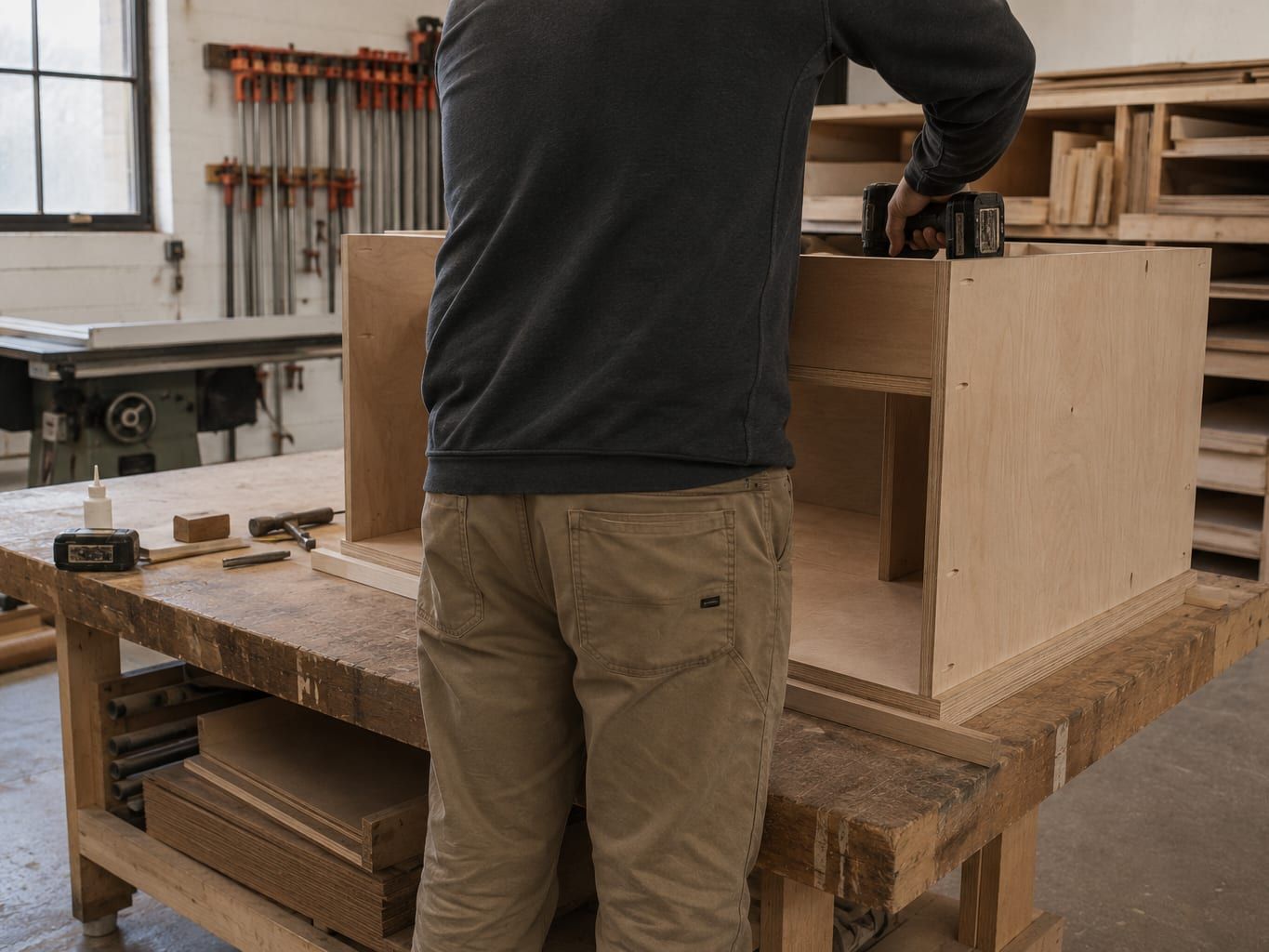
Some shops fit their own work, so the people who cut the parts also hang them. The advantage is that a problem found on the wall gets solved by somebody who knows exactly how the piece was built, and there is nobody to pass it to. Other shops build in house and hand the fitting to a crew they work with regularly. That can be just as good, and on a big job it is sometimes faster, because fitting and building can overlap.
What you want to avoid is not subcontracting. It is not knowing. The follow up questions are the useful part: has this crew fitted your work before, who supervises the week, and who picks up the phone if a door needs adjusting in month three. Any shop with a settled answer will give it to you plainly, and cabinet installation done by a team that has hung the same cabinetry many times before shows in the reveals.
Is the lead time believable?
Bench built cabinetry takes a while, and a company saying so is telling you the truth rather than losing your business. Design and drawings occupy a few weeks. The build occupies considerably longer. Fitting is measured in days once the pieces reach your house.
The signal worth reading is not the length of the quoted time. It is whether the answer has parts. A company that separates the drawing stage from the bench stage, and tells you which of your decisions gates which one, has genuinely thought about your job. A single figure with nothing behind it is a hope.
Two follow ups are worth asking. What decisions of mine could push this date, so you know which choices are urgent and which can wait. And what happens if the schedule slips, since a shop that tells you in week four is a very different experience than one that tells you on delivery day.
How do you check the work locally?
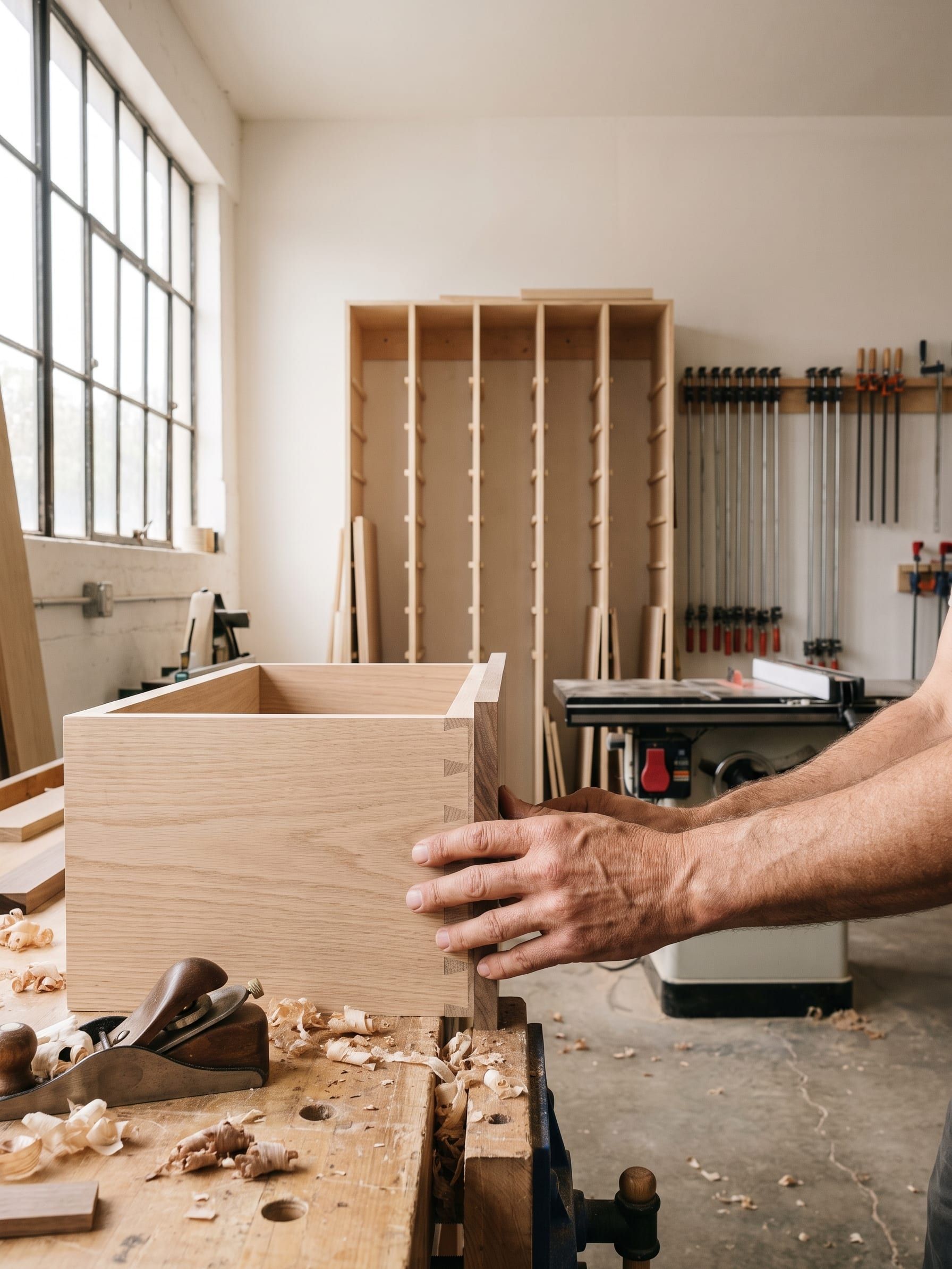
Photographs are the start and not the finish. Look at the parts of a picture nobody stages: where a run meets an out of square wall, how the fronts line up across a long bank of drawers, whether the gap around each door is even top to bottom, what happens where a run dies into a wall.
Then ask for two or three local addresses where similar work went in, and ask the owners what the fitting week was actually like. That question gets better answers than asking whether they were happy. You learn whether the crew showed up when they said, whether the house was cleaned each evening, and how a snag got handled.
Local matters more than it sounds. Somebody who has worked repeatedly in the same housing stock knows what is behind those walls before opening them, and a shop that has fitted a dozen tract kitchens in Fountain Valley arrives already knowing what the ceiling is likely to do above the run.
If a company is newer and has fewer addresses to offer, that is not a reason to rule it out. Ask to see the shop instead. Ten minutes among the machinery and the racks tells you a great deal about how carefully anybody works.
How do you check licensing and insurance?
Yourself, at the source, rather than by taking anybody's word for it including ours.
In California, contractor licenses are administered by the Contractors State License Board, and the board publishes a free public lookup. Ask any company you are considering for the license number it holds, then check that number on the board's own site. The record shows the status of the license, the classifications it covers and whether a bond is on file. The whole exercise takes a couple of minutes and it is the same effort whether the company is large or small.
Insurance works the same way. Ask for a certificate naming the coverage rather than a verbal assurance, and if a crew is going to be working in your house for a week, ask about workers compensation as well as liability.
Whether a license is required at all depends on the work involved. Supplying and fitting cabinetry can pull in other trades quickly once plumbing, electrical or structural changes are in scope, so the honest advice is to ask what your specific job involves and verify what the answer implies. Any cabinet maker worth hiring will expect the question and will not be offended by it.
What should the first visit feel like?
Mostly like being asked about your life rather than being sold cabinetry. The useful part of an initial appointment is the questions coming the other way. What do you cook, where does the recycling go, who else uses this room, what in the current kitchen makes you sigh every morning. Those answers change a drawing far more than a door style does.
You should also expect measuring to take a while, and to include things that never appear on a plan: how much the floor falls between one corner and the next, which stretches of wall have framing behind them, and whether the ceiling holds a single height across the room.
The strongest signal of all is a company willing to talk you out of the larger job. If your boxes are sound and your layout works, somebody should say so, even though it costs them money. That is the single most reliable indicator that the advice you get later, when the stakes are higher, is going to be straight.
The six questions, in order
Can I see elevations of my own room with dimensions on them. What exactly are the boxes, fronts, hardware and coating, in writing. Who is fitting it and have they fitted your work before. How long is each stage and what could move it. Where can I see two or three local jobs like mine. What is your license number, so I can look it up myself.
Six answers, one afternoon of phone calls. Nothing on that list requires you to know anything about woodwork, and the pattern of the answers tells you more than any single one of them does.
Ask us the same six. We answer them for anybody who calls, including the people who go on to hire a different shop, and that first appointment is free either way. Cabinets are the whole of what this shop does, from custom cabinets built on the bench through refacing and install only work, so the answers come quickly, and what arrives afterwards is a drawing set carrying true measurements rather than a number on its own.
Ask us all six questions, free
Free in-home consultation and a written quote.