Reface, Refinish or Replace Your Cabinets
Most people meet this decision from the wrong end. They pick a job first, then try to work out whether it suits the kitchen. It is far quicker the other way around. Name what is annoying you, and the answer usually names itself. Below are the complaints we hear, in the order we hear them, with what each one points to.
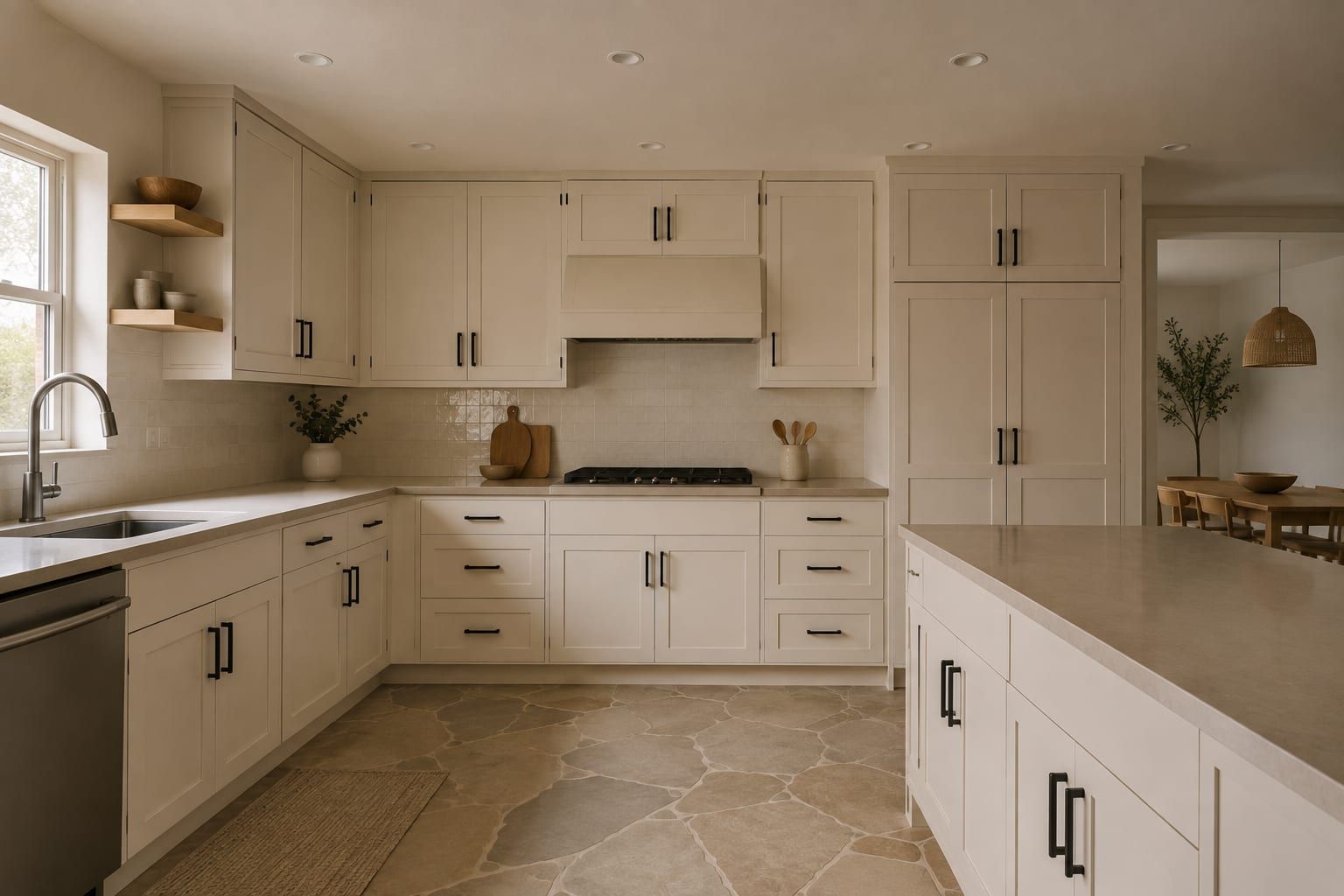
What does each job throw away?
The clearest way to hold the three apart is to ask what leaves the house.
Refinishing throws away the surface. The coating comes off your existing doors and a fresh one goes on. Everything else in the room, structure and shape alike, stays exactly as it is.
Refacing throws away the fronts. The doors and drawer faces go, new ones in a style you chose arrive, and the frames around them are covered so the whole visible surface matches. The structure stays.
Replacing throws away all of it. Boxes included, which is the only way anything can end up somewhere different from where it is now.
Each job reaches one layer deeper than the one above it, and costs more for doing so. The whole decision is working out which layer your complaint lives in.
The shape of the doors looks dated
You walk in and the room reads as another decade. Routed raised panels, arched tops on the uppers, heavy honey colored oak. Nothing is broken. You simply cannot look at it any more.
This is the complaint refacing exists for, because the door shape is the thing you object to and refacing is the only one of the three that changes a door shape without touching the boxes. A room can go from arched oak to a flat painted front in a few days on site.
The one condition is that the structure underneath is worth keeping, which is what the check further down this page is for. Where it passes, cabinet refacing gives you more visible change per dollar than anything else on this list.
The color is wrong but the doors are good
A different complaint that gets treated as the same one. Here the profile is fine, or even good, and the color is the part you have stopped liking. Dark stain in a room you want brighter. A cream that has yellowed. A gray that looked current ten years ago.
Refinishing answers this and refacing is overkill for it. Your doors come off, get taken back and recoated, and go home in the color and sheen you picked. Solid timber doors take this well, and often come back better than they started.
Two things rule refinishing out. Fronts that are not solid timber under the surface, since a printed or foil faced door cannot be sanded back to anything. And a profile you dislike, because refinishing is the one job that cannot change a shape. Recoating a door you never want to see again is money spent to keep looking at it.
The finish is worn where hands go
Bare patches around the handles. A dull rubbed band along the edge of the drawer everyone opens. The cabinet beside the range gone sticky and darker than its neighbors.
That is a coating that has reached the end of its life rather than a kitchen that has. If the doors are solid and the shapes are fine, refinishing is the direct fix and it is the cheapest of the three by a comfortable distance.
Painting sits alongside refinishing here and it is worth being clear about the difference, because the words get used loosely. Painting changes the color and leaves the wear underneath where it is. Refinishing takes the old coating back first, which is why it lasts longer and costs more. On a kitchen that has been repainted once already, going back to bare material is usually the only way to get an even surface again.
One caution. Where the wear has broken through and the material underneath has swollen, coating over it will not hold. That is no longer a surface problem.
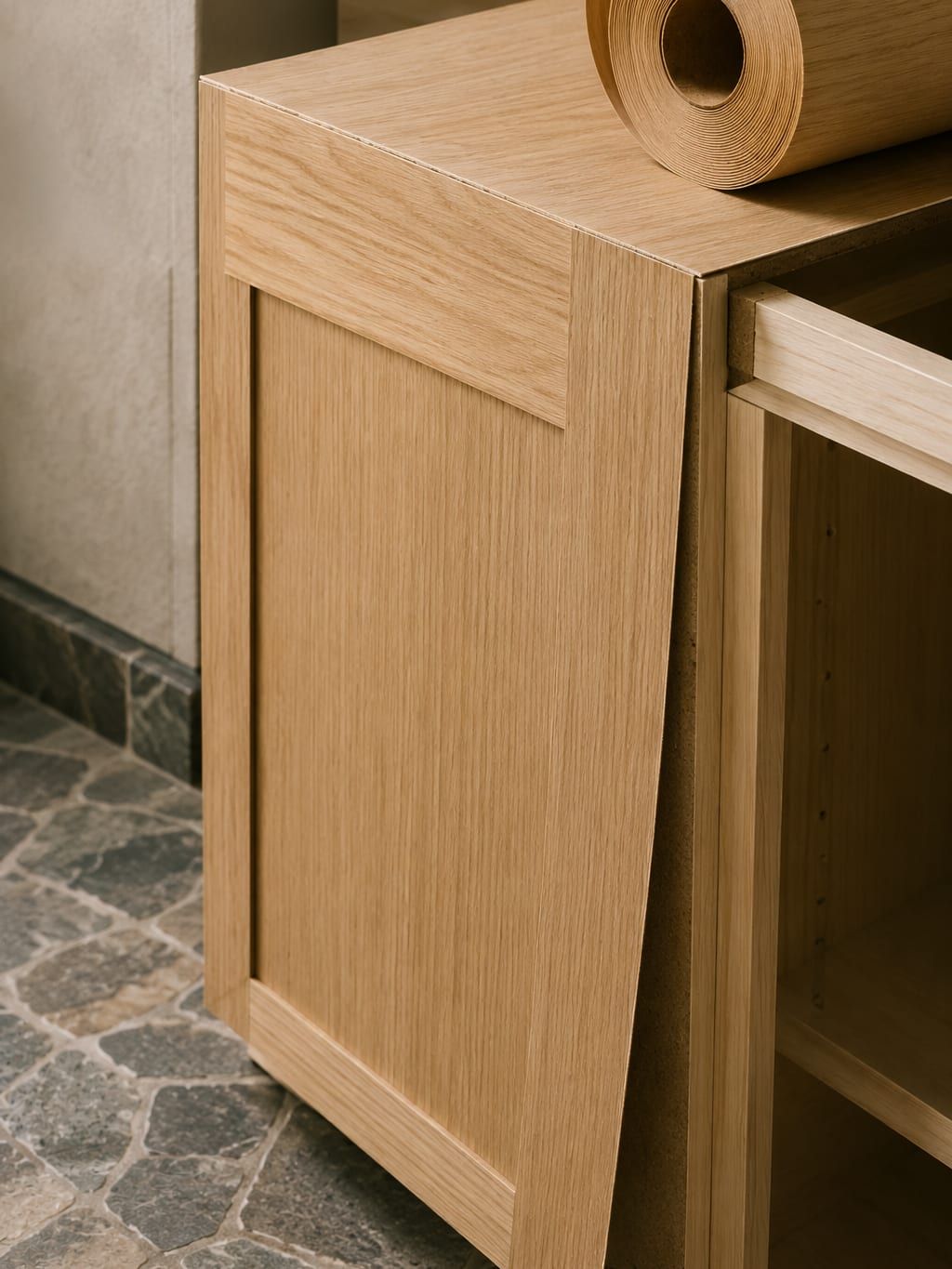
You fight the room every time you cook
Nothing lands beside the oven. The refrigerator door blocks the walkway. Two people cannot pass each other. You reach across the sink to get at anything. The room works against the way you actually use it.
None of that is a surface problem and neither of the cheaper jobs touches it. The two lighter options relocate nothing at all. A plan that works against you today will still work against you in a nicer color. This is the point at which custom kitchen cabinets stop being the expensive option and start being the only one that answers the question you asked.
A useful test. Write down the five things that annoy you most about cooking in there. If three of them are about where something sits rather than how it looks, you already know the answer.
You want drawers where the doors are
Reaching into the dark at the back of a base cabinet, on your knees, past a shelf edge. This one comes up more often than anything else on the list.
It has two answers at very different prices, and which one applies depends on how far you want to go. Rolling trays added inside the cabinets already on your wall bring most of that depth back within reach, at a small fraction of the price of building again, and fitting them takes very little time. That is often the right call, and it combines happily with a reface.
Full depth drawer banks are a different matter. A drawer bank is a differently built box rather than a differently fitted one, so it means new cabinetry for that section at least. Where the whole base run needs converting, replacing the lower cabinets is the honest answer.
Something under the sink has gone soft
Press the panel your cleaning bottles stand on. If it gives, bows or feels spongy, water has been in it, and material that has swollen once does not go back.
This is the symptom that changes the arithmetic, because a failed box will not hold a new door in alignment. Hanging good fronts on it is work you pay for twice.
It is also, on its own, rarely a reason to replace a kitchen. Water damage tends to be local to where the water was, which usually means one cabinet or two. Swapping the failed unit and treating the rest of the room as sound is routine, and it keeps a whole room in play that would otherwise look like a rebuild. Check every box, though, not only the obvious one. A slow leak travels further along a run than anybody expects.
The doors will not stay lined up
Gaps wider at the top than at the bottom. A door that swings shut on its own. A pair that meet unevenly.
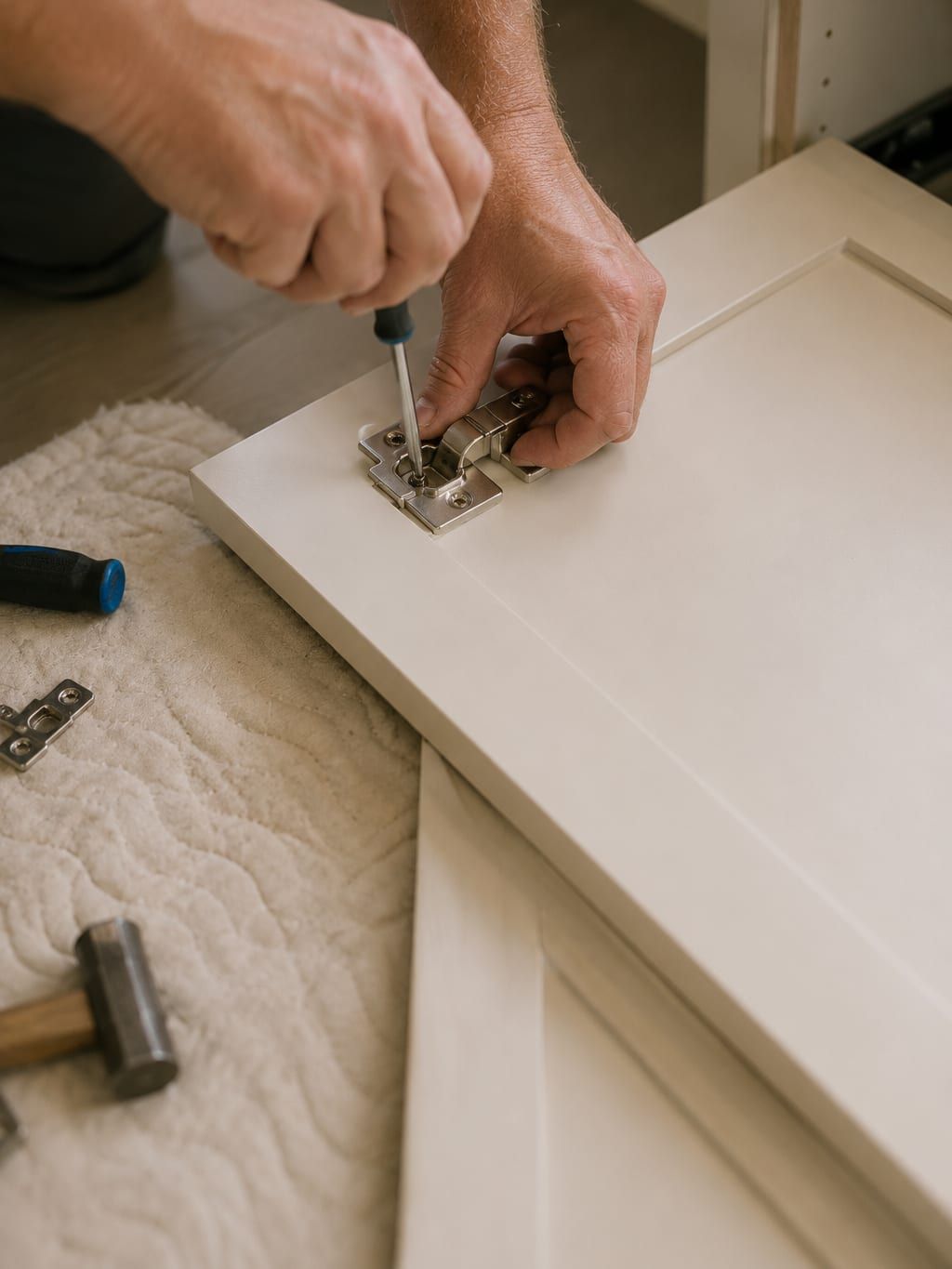
Before assuming anything expensive, look at the hinges. Old hardware corrodes and stiffens out of sight, and drifting doors are the first visible sign of it. On a sound kitchen, new hinges and an afternoon of adjustment cost very little and buy years of thinking time.
Where new hardware does not hold the fronts steady, the frames themselves have moved, and that points at the structure rather than the surface.
The check that settles it
Three looks, about five minutes, no tools.
Look at the bottom of the wet cabinets. Under the sink and beside the dishwasher. You are checking whether the panel is still flat and firm, and whether any edge has thickened or split.
Look at a loaded shelf from the side. A shelf holding a visible curve is telling you about the thickness of the material and how much life is in it. One sagging shelf is nothing. Sagging throughout is a pattern.
Look at the back of an empty cabinet. Reach in and feel whether the back panel is still fixed the whole way round, and whether the corners have stayed at right angles. A box that has opened up at the back has lost the thing that keeps it in shape.
Pass all three and the structure has years left, which puts refacing or refinishing in front. Fail them across several cabinets and you are looking at replacement, whatever the doors look like.
What the three cost, and how long they take
Around here a whole kitchen refaced falls between $12,000 and $22,000, which normally works out somewhere inside a forty to sixty percent share of what the same room costs built new. New cabinetry opens a far wider band, starting near $22,000 and reaching as high as $70,000. Refinishing is the cheapest of the three by a clear distance, generally landing close to half of a reface, because no new door is being made at all. Painting is cheaper again and is the shortest lived.
Those are planning bands for this area rather than an offer, and every one of them appears with its drivers on our cost guide.
Time is the part people underestimate in the opposite direction. Only replacement takes the room out of service for a stretch, because only replacement disconnects anything. With the other two your plumbing and appliances stay put, the doors are away for a while, and you cook around it. Bench built cabinetry is measured in months from first visit to last hinge. The two lighter jobs are measured in weeks, most of which is waiting rather than disruption.
What if your symptoms are mixed?
They usually are, and that is fine. Treating the room as one decision is what pushes people into spending more than they needed to.
Split it by run instead. Fresh lower cabinetry carrying the drawers you wanted, while the wall units keep their boxes and take new fronts in a matching finish. One replaced box in a refaced room. A refinished set of solid doors with new hinges and a couple of rolling trays behind them. All three are ordinary jobs, and all three cost noticeably less than doing the whole room to the standard of its worst cabinet.
The rule of thumb is simple. Spend at the level of the symptom, in the place the symptom is, and do not let one failed cabinet write the budget for twenty good ones.
When the category is not obvious from where you are standing, photograph the sink cabinet, one open door with its hinge visible, and the room from the doorway. That is usually enough to get a straight answer without anybody visiting, and we will say plainly where the lightest of the three would do, even though the custom cabinets this shop builds sit at the costly end of the list.
Find out which job your kitchen needs
Free in-home consultation and a written quote.